A Drink With an Accent: Reading America Through the Vodka Cranberry
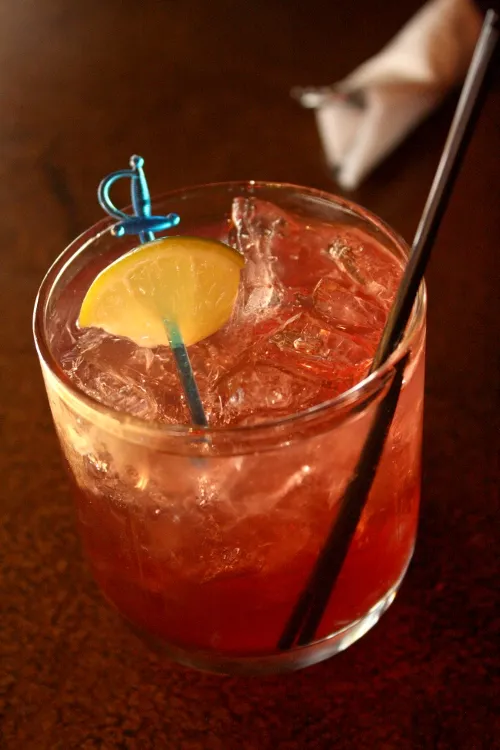
Photo: MoneyBlogNewz, CC BY 2.0, via Wikimedia Commons
There is a moment at every bar when someone orders a vodka cranberry and the room decides what kind of drink it is going to be. In one city it arrives tart and tight, a lime wedge pinned to the rim like a flag. In another it comes sweeter, redder, over more ice, in a glass that seems chosen for volume rather than elegance. Same two ingredients. Same name on the menu. Different dialect. The vodka cranberry is America's most personal cocktail precisely because it looks so impersonal.
The Case for Taking the Cranberry Seriously
The drink has a reputation problem. It is what people order when they do not want to think, which is unfair, because thinking is exactly what the drink rewards. A vodka cranberry is a ratio, a temperature, a garnish, and a small set of local assumptions. Change any one of those and you have a different drink. That is not a flaw. It is the whole point. A martini order can feel like a personality test. A vodka cranberry order is a conversation, and the accent changes with the zip code.
New Englanders will remind you, politely but firmly, that the Cape Codder came first: vodka, cranberry, lime, and not much else. That history matters. It explains why the drink in that part of the country tends to be sharper, leaner, and more interested in the lime than in the juice.
New England: Tart, Tight, and Unafraid of Lime
Ask a bartender in Providence or Portland, Maine, and you will hear a version of the same answer: use real cranberry juice if you have it, or a juice cocktail cut with seltzer if you do not, and do not forget the lime. The glass is usually a highball, the ice is plentiful, and the drink is stirred once, not shaken into a pink froth. The goal is a drink that tastes like cranberry with a spine, not cranberry sauce in a glass.
The local ritual is subtle. The lime wedge is not a decoration. It is part of the architecture. Squeeze it, drop it, and let the drink sit for a minute. The first sip should be tart enough to make you pay attention. If it is not, the bartender will look at you as if you asked for a martini with no vermouth and a lot of apologies.
The Mid-Atlantic: Pint Glass, Juice Cocktail, No Ceremony
In New York, Philadelphia, and the long corridor between them, the vodka cranberry becomes a working drink. It arrives in a pint glass more often than a highball, built with cranberry juice cocktail and a lemon or lime wedge depending on the bar's mood. There is no ceremony. There is a speed rail, a soda gun, and a bartender who has made this drink four hundred times since the shift started.
That is not a knock. The Mid-Atlantic version is efficient and honest. It knows what it is. The juice cocktail brings sweetness and color, the vodka brings the clear-cold backbone, and the citrus keeps it from turning into candy. The ritual is the first sip after a long day, when the drink is still cold enough to make your teeth ache and the room is loud enough that you do not have to explain anything to anyone.
The Gulf Coast: Sweeter, Slower, More Ice
Head south and the drink changes its posture. In New Orleans, Mobile, or Houston, the vodka cranberry is often sweeter, redder, and built over more ice, sometimes with a splash of soda to keep it lively. The lime is still there, but it is not always the star. The drink is designed to survive heat and conversation. It is meant to be held, not studied.
A bartender in the Gulf Coast tradition will tell you that sweet is not a mistake. It is climate. It is hospitality. It is the difference between a drink that refreshes and a drink that argues. The ritual is slower: a cold glass, a long pour, a wedge on the rim, and a nod toward the next round. If you order it dry and tart in a room full of sweet tea and humidity, you can do that, but you will be speaking a different language.
The Midwest and West: Restraint in Two Accents
Chicago and the Upper Midwest tend toward a sturdy, unpretentious version: vodka, cranberry, ice, lime, done. The glass is often a pint or a tall highball, the juice is whatever the bar keeps on the rail, and the drink is expected to last through a conversation about the game. It is not fancy. It is reliable. In the middle of January, that counts for a lot.
The West Coast, especially in Seattle, Portland, and the Bay Area, leans in a different direction. The drink may be drier, with 100% cranberry juice or a lighter juice cocktail, a squeeze of fresh lime, and a splash of soda. The glass might be smaller. The garnish might be a peel instead of a wedge. The ritual is restraint: let the cranberry taste like cranberry, let the vodka stay cold, and do not bury the whole thing under sugar.
Why the Simple Drink Gets Personal
The vodka cranberry is personal because it is easy to adjust. You can make it sweeter or sharper, taller or shorter, fizzier or still. You can use juice cocktail or 100% juice. You can squeeze the lime or leave it on the rim. You can stir it or let it settle. None of these choices is wrong. They are just choices, and choices are how a drink becomes yours.
That is why the same order can feel different in six cities. The drink is a small record of local taste: how much sweetness a place wants, how much acid it trusts, how much ice it considers polite. It is also a record of the person ordering it. A vodka cranberry can be a beginner's drink or a veteran's drink. It can be a shortcut or a statement. It can be the thing you order when you do not want to decide, or the thing you order because you know exactly what you want.
How to Find Your House Version Without a Spreadsheet
Start with three decisions and stop. First, choose your juice: cranberry juice cocktail for a rounder, sweeter drink, or 100% cranberry juice for a sharper one. Second, choose a ratio: two ounces of vodka to four ounces of juice is a good place to begin, but move it toward three ounces of juice if you want it tighter. Third, choose your garnish: lime is the default, lemon is for a softer drink, and an orange wedge is a holiday move that no one will arrest you for.
Then decide how you like it built. A highball with plenty of ice is the classic. A pint glass is the Mid-Atlantic answer. A shorter glass with a splash of soda is the West Coast edit. Stir it once. Do not shake it unless you want a cloudy, frothy drink. Squeeze the lime if you want the acid, or leave it on the rim if you want the option. There is no scorecard.
The point is not to engineer the perfect vodka cranberry. The point is to make the one you want on a Tuesday, and then make it again when a friend asks for something red and cold. Write your ratio on a sticky note inside the cabinet. Keep a bag of limes in the crisper. If a guest wants it sweeter, hand them the juice. If they want it sharper, cut a second lime. That is the whole system.
The vodka cranberry is not a complicated drink. It is a local one. Learn your accent, and you will always know how to order.