What Salt Knows: Vodka, Brine, and the Chaser That Got Loud
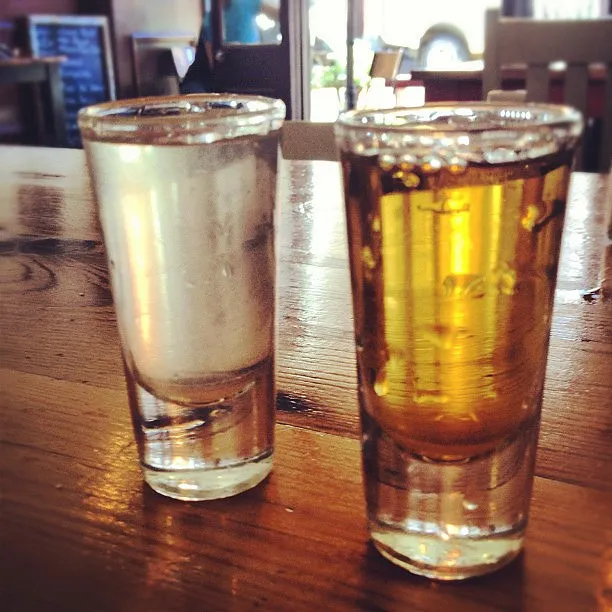
Photo: Derek Clark from Vancouver, Canada, CC BY 2.0, via Wikimedia Commons
It's a Tuesday night in a neighborhood bar that has never once been called a cocktail destination, and the bartender is already doing the thing: two small glasses hit the bar, one holding a short pour of cold vodka, the other cloudy and green enough to look like pond water. The guy on the end stool drinks them back to back, wipes his mouth, and orders a beer. Nobody claps. Nobody needs to.
That's the pickleback in its natural habitat. By now it's so thoroughly absorbed into American drinking that it barely registers as a trend — it's just something people order. But watch the ritual move around the country and a pattern shows up. The shot stays the same. The brine changes accent every few hundred miles.
The Shot That Refuses to Be Polite
Vodka spent thirty years being marketed as the spirit that disappears — filtered five times, distilled six, engineered to leave no fingerprint. The pickleback is the opposite instinct. It's a drink built around a flavor nobody would describe as elegant, paired with a spirit that's supposed to have no flavor at all.
And somehow it works. Not as a stunt, though it gets ordered as one, and not as a hangover cure, though plenty of people swear by that too. It works because brine is one of the most efficient palate tools in a bar, and cold vodka is the cleanest canvas you can hand it.
Where the Ritual Came From
The origin story gets told two ways. The most repeated version points to a Brooklyn bar in the mid-2000s, where a bartender reportedly handed a whiskey drinker a shot of pickle brine in place of the beer he'd asked for. A parallel claim comes out of Portland, Oregon, from roughly the same stretch of years. Nobody has settled it, and honestly the argument is part of the fun.
What matters more is what happened next: people started swapping the whiskey for vodka. The brine cleans up after whiskey's barrel sweetness just fine, but vodka leaves nothing behind for the brine to fight with. No oak, no vanilla, no caramel. Just salt, vinegar, dill, and the cold. The chaser becomes the whole drink.
Why Salt and Acid Beat Sweet Every Time
Ask a bartender why the combination clicks and you'll get a shrug and a phrase like "it resets you." There's more to it.
Salt suppresses bitterness and quiet muscle-memory receptors on the tongue that register harshness. Vinegar's acetic acid cuts through ethanol's oily coating, which is why a sip of brine feels like it scrubs the top of your mouth clean. Cold does the rest — at 38 to 40 degrees, the alcohol reads softer and the aromatics stay tight instead of sharp. Sweet chasers, meanwhile, add a film that makes the next sip of anything taste harsher.
Put all that over a vodka that contributes texture and nothing else, and the brine is doing 90 percent of the talking. Which is exactly why the version of the ritual you get depends on what the nearest pickle jar holds.
Six Brines, Six Accents
- Dill pickle, deli style. The default, and the one most people mean. Vinegar-forward, garlicky, a little cloudy. Best with a wheat vodka.
- Pickled okra or jalapeño brine. Common across Texas and the Gulf South, where the jar in the back of the fridge is likely to have heat in it. Expect a vegetal burn that lingers a beat longer than dill.
- Giardiniera. Chicago's contribution, and a good one: oregano, celery seed, carrot, cauliflower, and enough vinegar to wake up a sleeping dog. It's the most herbal brine in the lineup.
- Pickled beet. Upper Midwest territory. Earthy, faintly sweet, and it turns the whole glass a color that ruins the joke and improves the drink. Use less of it than you think.
- Olive brine. Technically a step toward a dirty martini, but plenty of bars pour it anyway. Briny, faintly saline-fatty, better as a slow sip than a slam.
- Kimchi brine. Found anywhere with a serious Korean grocery — Los Angeles, Atlanta, northern Virginia. Funky, sour, with a faint effervescence on the tongue that makes it feel almost carbonated.
One warning: bread-and-butter pickle brine is a trap. The sugar content turns the whole thing syrupy and sweet, and the shot stops working as a chaser and starts working as a dessert.
Building a Better Brine-Back at Home
A brine-back done badly is unpleasant in a specific way — too warm, too salty, too much. A few rules keep it on the rails.
Chill everything hard. Vodka lives in the freezer, brine lives in the fridge, and both should be cold enough that condensation forms on the glass within seconds. Warm brine tastes like salad dressing.
Keep the pour small. One ounce of vodka, one ounce of brine is the standard. If you're pouring something assertive, drop to three-quarters of an ounce of brine. Guests who want a bigger drink should be pointed toward a highball.
Use clean brine from a fresh jar. Spoon it out rather than pouring from the top, and strain out the solids. Brine that's been open in the door shelf for a month picks up a flat, tired taste that no amount of chilling fixes.
Don't combine them. The ritual is sequential, not mixed. The only exception is if you're deliberately building a pickle martini, in which case use a bar spoon of brine, not a splash, and stir it cold.
Taste before you serve. Salt levels swing wildly between brands — sometimes between batches of the same brand. A brine that tastes perfect on a pickle can be punishing in a shot glass.
If you want to make your own, it takes two days and almost no skill: one cup water, one cup white vinegar, a tablespoon of kosher salt, dill, a couple of garlic cloves, black peppercorns, and cucumber spears in a clean jar. Two days in the fridge and it's ready. Keep the salt around three to five percent of the total weight and you'll land in the right zone without a scale.
For a group, set out three brines in small pitchers beside a bottle from the freezer and let people build their own. It reads as generous rather than gimmicky, which is the entire trick.
When to Skip It
Don't brine-back a bottle you'd otherwise sip slowly — the ritual flattens nuance, and nuance is what you paid for. Don't do it after dessert, when the palate is already sweet. And don't treat it as a personality. The pickleback is a handshake, not a lifestyle.
Which may be the real reason it stuck. Vodka has spent decades being sold to Americans as refinement. Brine is the correction — loud, salty, a little ridiculous, and completely honest. Two glasses on a bar, no ceremony, no garnish needed.