A Bottle for the Sober Guest Shouldn't Be an Apology

Photo by Photo by Timothé Durand on Unsplash on Unsplash
Every holiday season, a bottle of nonalcoholic vodka gets carried into a party like a folding chair for a guest nobody planned for. It sits near the ice bucket, sweating through its label, and gets opened around 10 p.m. by someone who would rather be drinking something else. That bottle is usually warm, usually sweet, and usually abandoned by the second round. The good news, as the 2026 holiday season gets going: the category has gotten better. The less good news: it has also gotten louder, and not every bottle on the shelf deserves the space.
The Courtesy Bottle Has a Texture Problem
Vodka is a strange thing to strip of alcohol. It isn’t gin, where botanicals can carry the show, or whiskey, where oak and grain do a lot of the talking. Vodka’s whole argument is clean, cold, and direct. Remove the ethanol and you remove the engine. What’s left can taste thin, vaguely sweet, or like a scented candle that has been told to calm down.
That’s why the first rule of zero-proof vodka is simple: chill it hard. Not because cold fixes everything, but because cold gives the liquid a little structure. A warm pour of any nonalcoholic spirit tends to show every seam. Over ice, with a tight squeeze of citrus and a brisk tonic, the better bottles snap into focus. The weaker ones still taste like a rumor of vodka.
How Zero-Proof Vodka Gets Made
The category roughly splits into two approaches. The first is dealcoholized spirit: a real fermented or distilled base goes through vacuum distillation, thin-film evaporation, or reverse osmosis to remove the ethanol. Done well, this keeps some of the grain character and avoids the dreaded “flat soda” effect. Done poorly, it tastes cooked or hollow, like the memory of a smell.
The second approach is built from the ground up: water, glycerin, acids, botanical distillates, and natural flavors assembled to mimic the weight and bite of vodka. This is where the category gets creative and where it also gets slippery. Some producers use capsicum oleoresin or ginger extract for a faux burn, glycerin for viscosity, and tea or oak for depth. None of that is automatically bad. But when the label leans on “botanicals” to explain why the liquid tastes like a cucumber spa, that’s not vodka anymore. That’s a flavored nonalcoholic spirit wearing a vodka-shaped coat.
Where It Works: Highballs, Spritzes, and the Faux-Martini
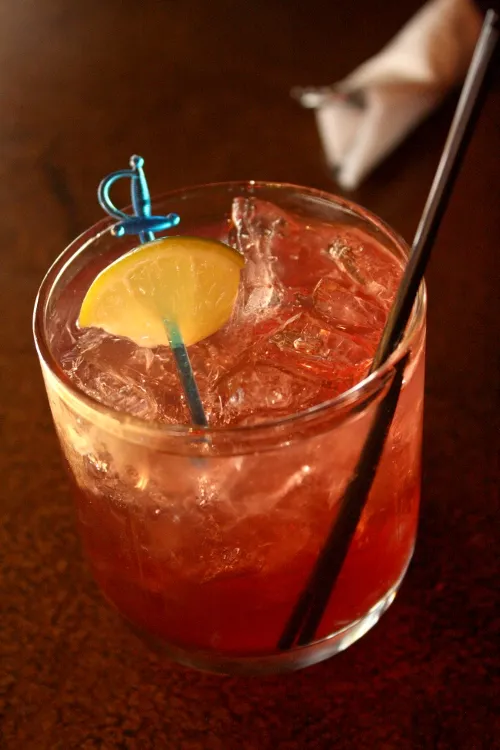
A zero-proof vodka soda is the easiest test. Use a tall glass, plenty of ice, a measured pour, and a lime wedge with some backbone. The best bottles stay dry and a little austere; they don’t fight the bubbles. If the drink needs three squeezes of lime and a pinch of salt to taste like anything, the bottle is doing less work than the garnish.
The faux-martini is the harder test. A real martini gets its texture from dilution, temperature, and the slight sweetness of vermouth. A nonalcoholic version can work if you treat it like a cocktail rather than a substitution. Shake it hard with ice, add a saline solution, and use a dry vermouth substitute sparingly. Serve it in a frozen glass with an olive. What you’re building is a cold, savory, bracing drink — not a lie. The moment you call it “just like the real thing,” you’ve lost the room.
Spritzes are the category’s sweet spot. Zero-proof vodka, a bitter aperitivo-style mixer, soda, and an orange peel can carry a whole evening. The vodka doesn’t need to be the star. It needs to be the clear backbone that keeps the drink from turning into juice.
Where It Falls Apart
Neat. Room temperature. Anything creamy. Anything that asks the liquid to provide mouthfeel on its own. A zero-proof vodka served neat at a holiday party is a dare, not a drink. It exposes every shortcut: the glycerin slick, the artificial burn, the sweet finish that hangs around like a guest who missed the last train.
It also falls apart when hosts treat it as a penalty box. Putting the nonalcoholic bottle in the back of the fridge and handing it over without a glass, garnish, or explanation is worse than not stocking it at all. Nondrinkers aren’t asking for a lecture. They’re asking for a drink that looks like it belongs in the room.
Stocking the Shelf Without the Gold Star
Buy one bottle, not five. The zero-proof shelf is still young, and a single solid bottle plus good mixers will outperform a sad parade of half-used experiments. Look for dealcoholized vodka if you want something closer to the real thing; look for “distilled nonalcoholic spirit” if you want something built for cocktails. Check the sugar. Check the burn. If the label promises “vodka-like heat,” be skeptical until you taste it.
At Doddep, we’re in the business of clear spirits, not moral instruction. A host’s job is not to make a point about drinking or not drinking. It’s to make sure the sober guest gets a proper glass, a proper garnish, and a drink that doesn’t require a disclaimer. Keep the bottle chilled. Put it next to the real vodka, not in the pantry. Use the same glassware. Offer it without a speech.
A Short Buying Checklist
- Chill first. Store it in the freezer or the back of the fridge; warm zero-proof vodka tastes like unfinished business.
- Read the fine print. “Dealcoholized” and “distilled nonalcoholic spirit” are different products. Know which one you’re buying.
- Test it in a highball. Vodka soda, lots of ice, fresh lime. If it works there, it can work elsewhere.
- Skip the neat pour. This category is built for mixing, not meditation.
- Buy for the guest, not the label. A bottle that makes a good drink is worth more than a bottle that makes a good story.
The Dry January ahead will bring another wave of bottles and another round of claims. Some will be genuinely useful. Some will be flavored water with a marketing budget. The difference is easy to taste once you stop treating the sober guest like an afterthought. Stock the shelf with intention, chill it down, and pour it like it belongs. That’s not a courtesy. That’s hospitality.